Colombo, Sri Lanka — October 2026
Huawei showcased 18 practical artificial intelligence (AI) applications at Sri Lanka AI Week 2026, highlighting how emerging technologies could support digital transformation across education, finance, government, industry, green energy and everyday life.
The event, held from September 28 to October 4, brought together representatives from government, the technology industry, academia and other sectors to explore the role of AI in Sri Lanka’s digital future. Huawei participated as the AI Technology Partner for the second consecutive year, following the inaugural National AI Expo in 2025.
AI Applications Across Multiple Sectors
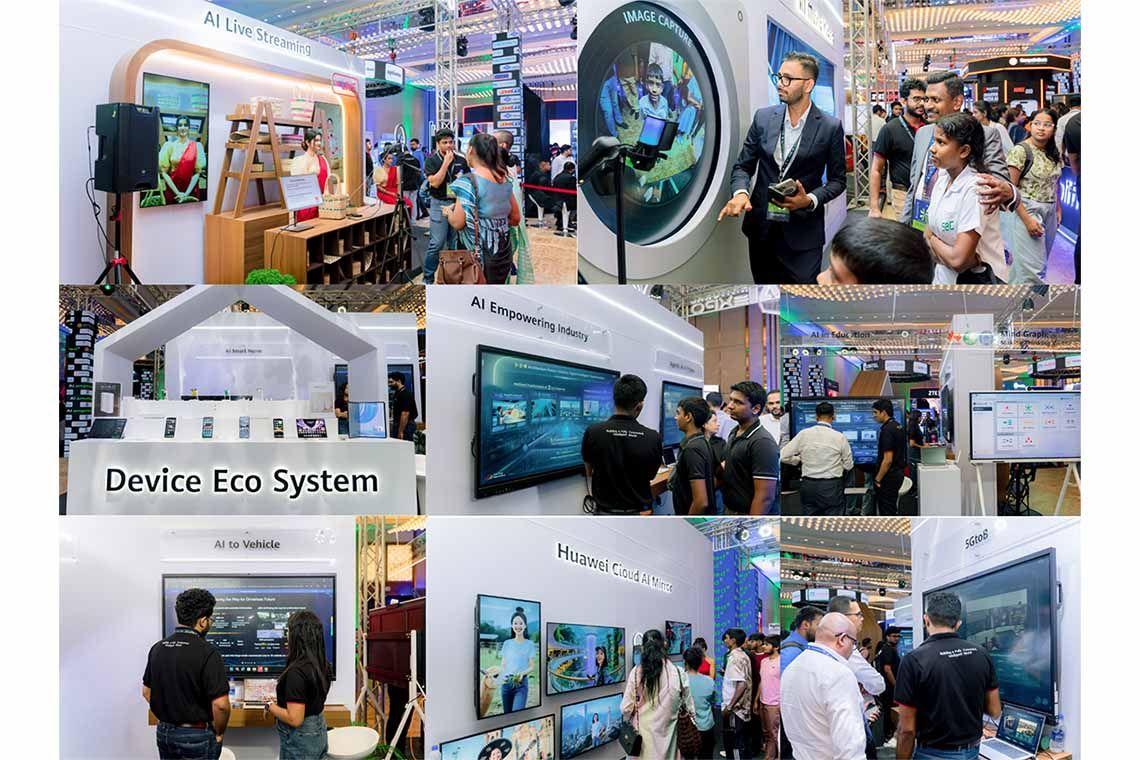
Huawei’s exhibition featured 18 demonstrations designed to illustrate how AI can be applied to practical challenges in daily life, business operations and public services.
Among the applications showcased were AI-powered digital assistants, multilingual communication systems, smart-home technologies and AI-generated music videos. A digital human solution developed with iFLYTEK demonstrated how AI could support multilingual customer service around the clock, while a multilingual AI screen illustrated how real-time communication between people speaking different languages could be improved.
The company also presented AI livestreaming technologies for digital commerce and tools designed to help businesses monitor AI usage and manage associated costs. An agentic AI demonstration for the financial sector highlighted potential applications of intelligent automation within financial institutions.
Education Takes Centre Stage
Education was one of the key areas featured at the exhibition. Demonstrations included AI in Education, the AI Hands-on Classroom, MindGraph in collaboration with Beijing Normal University, and a Smart Classroom solution.
The Smart Classroom demonstration showed how connected technologies could link teachers and students in different locations, allowing them to participate in a shared learning environment. The AI in Education showcase explored ways artificial intelligence could assist teachers, support learning activities and enable more personalised educational experiences.
MindGraph also demonstrated visual learning capabilities, including support for Sinhala and Tamil learning contexts. These applications highlighted opportunities to expand access to educational resources and strengthen digital learning, particularly where geographical barriers limit access to specialised teaching facilities.
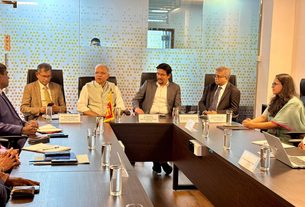
Prime Minister Dr. Harini Amarasuriya visited the Huawei exhibition alongside officials from the Ministry of Education, Higher Education and Vocational Education. During the visit, she experienced the Smart Classroom, AI in Education and MindGraph demonstrations.
The Prime Minister acknowledged the efforts of the ministry, Huawei and its partners to demonstrate practical applications of AI in education, emphasising the potential of technology to support teachers, expand learning opportunities and contribute to a more inclusive and future-ready education system.
Supporting Industry and Government Services
Beyond education, Huawei showcased AI applications aimed at improving industrial operations and public services.
The AI in Government demonstration explored potential uses across public administration, city governance, healthcare, agriculture and meteorology. These applications illustrate how AI could assist with analysing information, supporting decision-making and improving the delivery of selected public services.
The company also presented AI Empowering Industry and 5GtoB solutions. The demonstrations covered areas such as smart manufacturing, logistics, healthcare, intelligent inspection, smart cities and smart-port operations.
In the energy sector, Digital Power for Intelligence highlighted the use of AI in data-centre monitoring, energy storage management, operational optimisation and predictive maintenance. Such technologies could help organisations identify potential equipment problems earlier and manage infrastructure more efficiently.
Government and Industry Leaders Visit the Exhibition
The exhibition attracted senior representatives from Sri Lanka’s government and technology ecosystem. Deputy Minister of Digital Economy Eng. Eranga Weeraratne, Deputy Minister of Industry and Entrepreneurship Development Chathuranga Abeysinghe, Secretary to the Ministry of Digital Economy Waruna Sri Dhanapala, and Chinese Ambassador Wei Huaxiang also visited the Huawei display.
Their visit included demonstrations focused on AI-enabled industry, education and smart classrooms. The engagement highlighted the importance of cooperation among government institutions, technology providers, educational organisations and industry stakeholders in developing the country’s digital capabilities.
Huawei Emphasises Local Skills and Partnerships
Huawei Sri Lanka CEO Daniel Wu said the company would continue bringing international experience, technology and ecosystem resources to Sri Lanka while working with local partners to strengthen capabilities, develop talent and create value for the country.
The company’s participation reflects a broader emphasis on building the skills, infrastructure and partnerships needed to support AI adoption. Turning demonstrations into practical deployments, however, will depend on factors such as affordability, connectivity, data protection, cybersecurity, workforce training and the ability of local organisations to integrate these systems effectively.
AI’s Role in Sri Lanka’s Digital Future
Sri Lanka AI Week 2026 provided a platform for exploring how artificial intelligence could contribute to the country’s digital economy. The applications demonstrated by Huawei illustrated potential opportunities in education, commerce, industrial productivity, public administration and energy management.
As Sri Lanka continues to pursue digital transformation, collaboration between the public and private sectors will remain important in developing local AI expertise and identifying solutions suited to the country’s needs.
The long-term impact of these technologies will depend not only on innovation but also on responsible implementation, inclusive access and the development of a skilled workforce capable of using AI effectively.